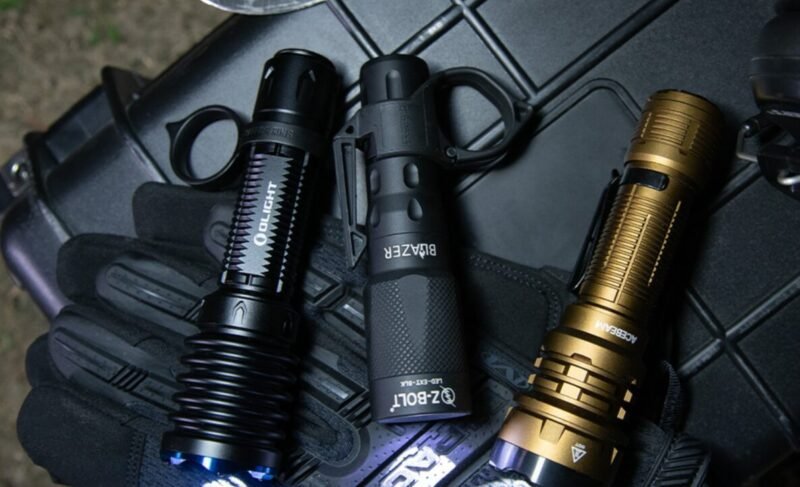
Why Modern Law Enforcement Is Moving Beyond Traditional Police Tactical Torches?

Police personnel frequently operate in uncertain settings where lighting might quickly change. Maintaining visibility while having both hands accessible has become a critical operational requirement for everything from traffic incidents and nighttime patrols to building searches and emergency response.
While police tactical torches remain valuable tools for focused illumination, many agencies are now complementing them with wearable lighting systems that provide continuous visibility and hands-free operation. This shift reflects how law enforcement equipment continues to evolve alongside modern policing needs.
Modern Policing Demands Greater Mobility
Officers nowadays carry out a wide range of tasks in a single shift. They may switch from stopping cars to protecting accident scenes or helping with public gatherings, frequently in shifting lighting.
Typical duties consist of:
- Inspections of vehicles
- Control of traffic
- Patrols at night
- Search functions
- Crowd control
- Response to emergencies
Equipment that facilitates rapid movement while enabling police to maintain awareness of their surroundings is necessary in these circumstances.
Hands-Free Equipment Is Becoming More Practical
Although a conventional flashlight offers focused illumination, many police duties necessitate the use of both hands. It’s not always practical to hold a light all the time when conducting searches, managing equipment, or interacting with the public.
As a result, numerous departments are implementing wearable lighting options that can:
- Attach straight to uniforms
- Provide lighting without using your hands.
- Boost the visibility of officers
- During operations, assist with movement
- Minimize the need to carry handheld illumination at all times
This method preserves uniform lighting while enabling police to concentrate more intently on the current task.
Visibility Matters During Roadside Incidents
For law enforcement officers, traffic stops and roadside crises continue to be among the most taxing circumstances. Officers sometimes work in close proximity to moving cars when sight is crucial, especially after dark or in bad weather.
Support for lighting is frequently utilized during:
- Collisions in traffic
- Assistance with vehicle breakdowns
- DUI checkpoints
- Lane closures
- Support for road construction
During these activities, portable illumination systems aid in increasing visibility for both approaching drivers and cops.
Equipment Must Perform in Challenging Conditions
Every day, law enforcement equipment is subjected to harsh conditions. Equipment that can endure frequent field use is necessary due to rain, dust, impacts, and extended shifts.
Agencies frequently prioritize characteristics like these when choosing lighting equipment:
- Waterproof design
- Resistance to shock
- Dust defense
- Extended battery life
- Dependable performance
For equipment that is anticipated to function throughout prolonged patrols and emergency circumstances, durability has become a crucial factor.
LED Technology Has Improved Professional Lighting
Officers’ expectations about professional lighting equipment have evolved due to advancements in LED technology. Compact design, effective battery performance, and strong illumination are all combined in modern systems.
Many organizations search for gear that provides:
- High-power LED illumination
- Various lighting settings
- Battery recharging
- Construction is lightweight.
- Prolonged operations
These enhancements contribute to lighter equipment while maintaining consistent performance over the course of a shift.
Wearable Lighting Supports Team Coordination
Several cops serving in various areas are frequently involved in large-scale situations. Keeping team members visible can enhance situational awareness and communication, especially in crowded or dimly lit areas.
Wearable lighting devices are frequently utilized in:
- Public gatherings
- Search functions
- Security around the perimeter
- Patrols by Marines
- Patrols on bicycles
- K-9 deployments
Specialized choices that facilitate coordination during tactical operations are also provided by certain professional lighting systems.
Choosing Lighting Equipment for Professional Use
Agencies frequently take into account factors other than brightness when assessing police tactical torches and related illumination equipment.
Important elements could consist of:
- Mounting adaptability
- Battery life
- Sturdiness
- Operational simplicity
- Resistance to weather
- The ability to operate without using your hands
Efficiency and officer preparedness for a range of tasks can be enhanced by choosing equipment that satisfies operational objectives.
Final Thoughts
As law enforcement duties become more varied, professional lighting continues to change. Police tactical torches are still a crucial component of an officer’s gear, but many organizations are adding wearable illumination solutions that offer more versatility, visibility, and hands-free operation.
Guardian Angel Devices offers robust, wearable illumination systems that support patrol tasks, roadside response, search operations, and other demanding field assignments. These solutions are specifically made for law enforcement professionals.