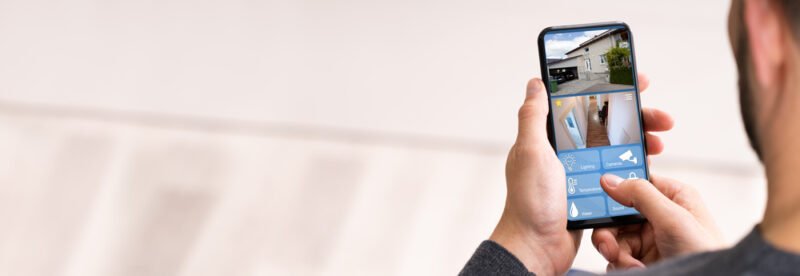

You have finally decided to invest in home security and automation. All your friends are already doing it, so you figured your time has come. The only question is whether you will go with a professionally installed system or opt for DIY home security. As far as you know, all you need to install a DIY system is a Saturday afternoon and some basic hand tools.
DIY home security has become increasingly popular over the last decade. Its big advantage is cost. DIY systems tend to be less pricey than their professionally installed counterparts. But with the lower price comes a pretty big trade-off: the requirement to handle the installation on your own.
It’s Easy, Most of the Time
Equipment manufacturers have made huge strides towards making their systems easy to install. Most of the time, self-installation is pretty straightforward. Anyone comfortable with smartphones and home networks should not struggle too much. But there are always exceptions to this rule.
Your best bet for easy installation is to choose a premium brand ecosystem and stick with it. Most of the high-end ecosystems support a wide range of devices from major manufacturers. Go with a lesser-known brand and you are rolling the dice in terms of ease-of-installation and device support.
DIY Security’s Biggest Challenges
My advice to any homeowner whose technical skills are limited is to skip DIY home security and go with a trusted brand like Vivint Home Security. Vivint offers free professional installation with each of its systems. They send fully trained and knowledgeable technicians to complete the installation, test the system, and show homeowners how to use it.
If you would still prefer to go the DIY route, be aware that you will face some challenges. Here are the biggest ones:
1. Getting Devices to Talk
An entry-level system comprising a couple of window and door sensors and a single video camera will not give most homeowners trouble. But if you are moving beyond the basics, you could run into trouble getting the devices in your system to talk to one another. Even with instructions and a companion mobile app, home security and automation devices are finicky. Be prepared for some fiddling.
2. Device Compatibility
Assuming you want to add devices down the road, be prepared to run into compatibility issues. The risk for such issues is greater if you purchase from brands outside of your chosen ecosystem. But even devices built for that ecosystem may not be compatible if your original hub is too old to support them.
3. Network Issues
Home networks are limited in terms of bandwidth. A home router can only handle so much traffic before congestion becomes a problem. So if you’re already running nearly a dozen devices across your network before you install your security system, the extra equipment could push your network over the edge. You may have problems with latency and device glitching.
4. Monitoring Fees
Given that you are looking at DIY home security, you might be planning to monitor the system yourself. That’s great. But if you would rather have the system monitored professionally, you will have to pay for the service. Be aware that some monitoring providers require multi-year contracts. Others offer services month-to-month.
It’s Your Choice
The beauty of modern home security is choice. You can go with professional installation and remote monitoring from a well known brand like Vivint. But you can also choose DIY home security that you will install and monitor yourself. You get to choose whatever is best for you and your family. That’s the way it should be.